


Why Inclusivity for Neurodivergent People is a Feminist Issue

Updated: Apr 27
In the last two years, I’ve taught over a dozen CLEs on neurodiversity in the legal profession. (In case I’ve lost you already, neurodiversity means the full range of ways human brains can work; neurodivergent means people whose neurology is outside what is generally considered the norm. Neurodivergent conditions or identities include autism, ADHD, bipolar disorder, PTSD and C-PTSD, OCD, dyslexia, and countless others.) Here’s a recording of the CLE I did for CAMP (hosted on Facebook, but a Facebook account is not required to view), if you’re interested in some general education.
No two versions of that presentation have been the same, but a few things have been consistent across almost all of them. The one non-negotiable about my approach is that I center the experiences of neurodivergent adults who work in the legal profession. As a neurodivergent attorney, that’s the main perspective I know about, so I wouldn’t be qualified to teach it any other way. But I also think it’s important because so much of the other training and education out there assumes we’re talking about people who aren’t in the room, and who present extra challenges for the people who are.
Before I began speaking on this topic, I’d seen trainings about neurodivergent children, criminal defendants, and clients of social services; but never about neurodivergent professionals. Those trainings all had paternalistic undertones, if not overtones.
There are two things I’ve noticed almost every time I’ve spoken on this topic: there’s at least one person in the room who comes to a new realization about themselves, and parts of my presentation visibly resonate more with the women in the room than with anyone else. These two observations are closely related, and they both show why neuroinclusion must be a central piece of the contemporary feminist project.

Why are so many of us getting diagnosed in our 30s, 40s, and 50s?
I couldn’t possibly count the number of people I know who’ve figured out they’re neurodivergent within the last ten years or so, as adults in our 30s and beyond. In fact, almost everyone I’m close with identifies as neurodivergent (as I discuss in my presentations on this, we have a tendency to find each other, even when we don’t know), but I can only think of a few who were diagnosed in childhood.
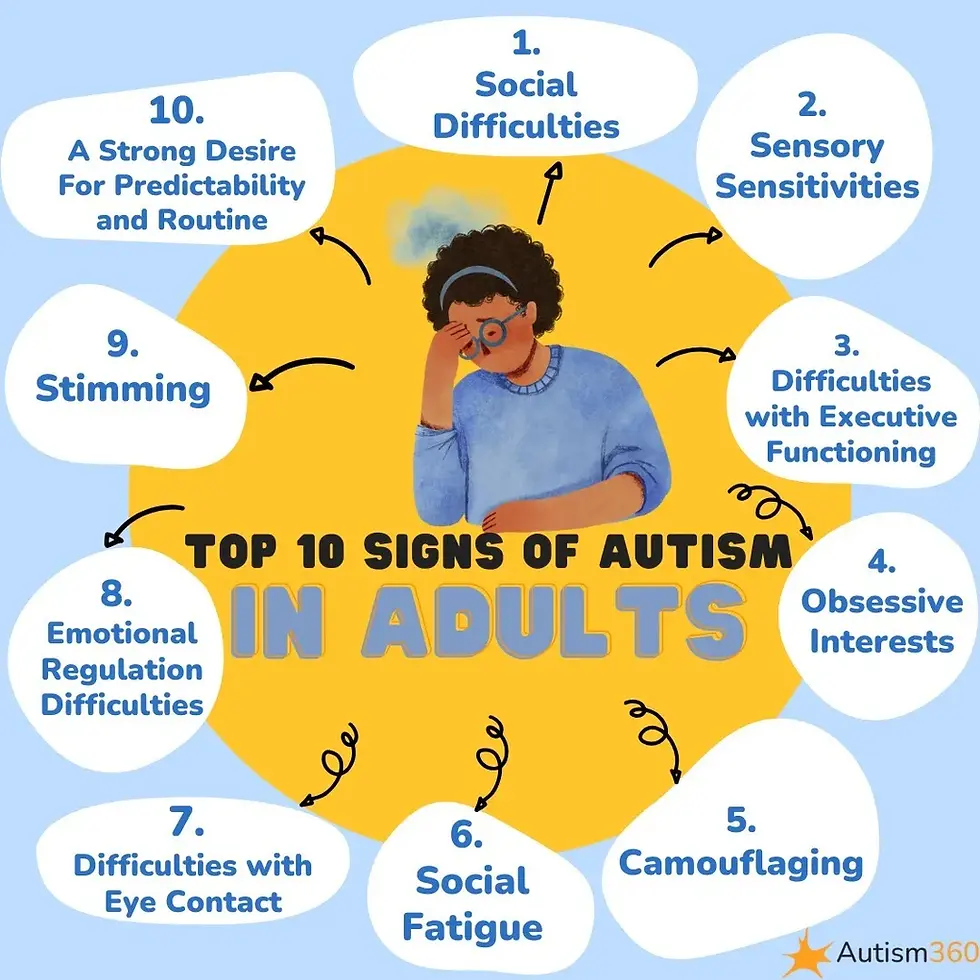
Why is this? I’ll tell my own story to illustrate some of what’s going on. As a child, I excelled academically, but there were certain areas where I couldn’t keep up. I was socially awkward, and I lacked both the social skills and the hand-eye coordination for sports (I was raised as a boy, unfortunately, so being able to throw, hit, or kick a ball was important). I also struggled with executive dysfunction: I could never keep my room tidy, and I often forgot about or procrastinated homework till the last minute. But my intelligence was almost always enough to overcome these problems and get me good grades, so I was flagged as weird but never as disabled.
It turns out I have ADHD (as well as autism, C-PTSD, and other conditions), which explains a lot in retrospect. But until the last 5 years or so, the only image of ADHD I’d ever known was the hyperactive, disruptive, ‘annoying’ boy who couldn’t succeed in school because he couldn’t sit still. That couldn’t be farther from who I was: my inability to focus looked more like getting lost in my own head, keeping my emotional dysregulation hidden as well as I could, struggling to care enough about tasks that didn’t offer enough novelty or challenge, and shutting down from overwhelm at the prospect of starting a seemingly straightforward task. I had no idea I could have ADHD until I started seeing more people with ADHD describe their experiences in their own words, rather than the observations of exasperated teachers or parents. I know several people who’ve gotten their own adult diagnoses from hearing me describe some of these same things, and seeing themselves in my story.
My autism followed a similar trajectory. The stereotype is the boy who’ll go on for hours about trains without letting you get a word in edgewise. I’ve always had intense interests (albeit not trains), but I’ve also always had intense anxiety that no one wanted to hear what I had to say, so I’ve mostly kept those interests to myself. I’ve always struggled with indirect communication, unwritten rules, and social scripts; but I always understood it was my job to try my best at those things, and I chalked it up to a personal failing rather than a neurological difference when I couldn’t succeed at it. I’ve always been sensitive to certain kinds of sensory input (loud noises, bright lights, too many things happening at once), but never thought to question why other people wanted to be in such an overwhelming world while I shrank away from it. Again, it was only through finding community with other autistic people that I came to understand who I was and how I’d gotten where I am.
“We’re high-functioning until we’re not,” as one of my partners likes to say. This is another piece of the late-diagnosis puzzle. As children—with fewer responsibilities, and fewer consequences when we slip up—it can be easier to work around certain challenges. As we get older, a lifetime of masking (hiding our neurodivergent traits), self-accommodating (finding our own workarounds), and struggling without support can add up to put us at serious risk of burnout. At the same time, as we move into more demanding academic institutions and then jobs, as our responsibilities increase, and as there are fewer safety nets to catch us when we fall, our old coping strategies might not be enough anymore. So you see someone who was at the top of their game, had it all under control, impressing everyone with the quantity and quality of their work, in line for a big promotion… suddenly barely able to get out of bed or get through a half-day at work without breaking down in tears (this was me a couple of years ago). That may be the first time she realizes she has a neurological difference, or the first time she realizes it’s been affecting her as much as it has.
What we’re witnessing today isn’t a dramatic rise in these conditions, but a dramatic rise in community, self-awareness, and willingness to disclose.
What does this have to do with gender or women’s liberation?
I’m glad you asked! It has everything to do with gender—and also race, class, and other identities.
Women and marginalized people face additional barriers to diagnosis
Until recently, the medical and social discourse on neurodiversity has been dominated by the way it tends to show up in boys and men (especially white, middle- or upper-class, cisgender, heterosexual boys and men). Recall my story about having no clue my experiences were consistent with ADHD until a few years ago. Boys tend to exhibit the more stereotypical, hyperactive, extroverted symptomology, while girls tend to exhibit the more absent-minded, introverted symptomology. This has produced a huge gender disparity in childhood diagnoses.
Interestingly, as I’ve figured myself out more in recent years, I’ve realized I do have some of those more hyperactive, ‘disruptive’ elements of ADHD. But like so many other women and people from marginalized backgrounds, I tried to never let it show, because I believed from a very young age that I wasn’t allowed to take up space, make others uncomfortable, or have needs. When we feel more pressure to prioritize other people’s comfort, we hide our true selves (even from ourselves), and it can take decades to uncover who we really are—if we’re lucky enough to ever reach that point.
The same is true of autism and many other conditions: these conditions may express themselves in behaviors that are more socially acceptable for girls, girls may be likelier to hide their differences for the comfort of others, or behavioral differences that don’t follow male stereotypes may not get noticed as flags for potential neurodivergence.
There’s also bias among care providers. It’s no secret that men’s complaints tend to be taken more seriously, while women are told it must be that time of the month, or they just need to lose weight, or they’re exaggerating their symptoms for attention. Bias also has a huge effect on diagnoses across race and class: the same behavior may be seen as a personality or cultural defect when it’s expressed by people of color and those from lower class backgrounds, but a red flag to assess for neurological differences or mental health concerns when it’s expressed by a white person from a more privileged background. And before we even talk about what happens once someone gets in the door to a doctor’s or guidance counsellor’s office, not everyone has equal access to that door in the first place.
Gender is complicated, and these dynamics also affect transmasculine and transfeminine people
So far in this article I’ve talked about girls, women, men, and boys without digging any deeper into gender, but it’s worth pausing for a moment to take a deeper dive and be more precise with our language. These dynamics affect women, people raised as women, and people perceived as women—three overlapping but distinct categories. Childhood pressures to make ourselves smaller apply to most people who society saw as a girl during childhood; that category includes most cisgender women, transgender men, intersex people who were assigned female, and nonbinary people who were assigned female.
But it doesn’t stop there: many transfeminine people (transgender women, and nonbinary people who were assigned male at birth and now present in more feminine ways) share these experiences, too. The reasons why are a bit harder to understand—I fall into this category, and I don’t fully understand it myself. But many of us also had a sense from a very young age that we were different, in ways that society didn’t want to see; so many of us internalized that same message that we needed to keep other people comfortable and take up as little space as possible.
Many of us also identified with women or with femininity from a young age, and therefore also expressed our neurodivergence in the more feminine-coded ways that teachers, parents, and doctors overlooked—even coming from someone they thought was a boy. Whatever the reason, when I talk about my journey toward diagnoses in my late 30s and the reasons it didn’t happen sooner, it’s more often women than men who see themselves in my story.
Finally, statistical trends and societal observations are not absolute truths or rigid binaries. Neither biology nor culture work that way. Some women are diagnosed in early childhood, and some men are never diagnosed; some women mask less, and some men mask more. Some nonbinary people were raised in environments that accepted both their neurological and gender experiences, and many weren’t. We can, and must, hold the dual truths of systemic forces and individual variation; we deserve to be seen and respected in all our infinite variety.
Exclusionary attitudes toward neurodivergent people are especially harmful to women and marginalized communities
Neuronormativity is the expectation that everyone live and behave according to neurotypical norms, or hide their neurodivergent traits. Neuronormativity harms everyone, and it intersects with sexism to harm women in distinct ways. For example, blunt communication, or challenges with unspoken rules and social niceties, are very common neurodivergent traits. And those traits can lead to a man being called a “straight shooter,” or a woman being called a b*tch.
Having lived a significant chunk of my adult life presenting as a man before I came out as a nonbinary woman, I have personal knowledge of how direct communication lands differently depending on perceived gender. It was by no means smooth sailing when I presented male: I put my foot in my mouth many times, I was terrible at schmoozing and small talk, and these things held me back in both personal and academic or professional relationships. It takes a certain kind of man to get praise for being blunt, and I was never that kind of man.
But that’s nothing compared to what it’s like now that I’m generally perceived as a woman. I’ve become much better at being diplomatic and thoughtful in my communication, but nonetheless face more criticism than I used to for the way I deliver feedback. Women are expected to walk a perfect tightrope: we have to achieve more than a man to get recognition, and we also have to care perfectly for everyone else’s feelings while we do it. That’s hard for any woman, but it’s impossible for many neurodivergent women.
In addition, as we discussed earlier, women and marginalized people are disproportionately likely to be undiagnosed or late-diagnosed. The process of going decades without the self-knowledge or support we needed can be devastating, and leave us with lifelong scars. In addition, adult diagnoses—especially diagnoses after all formal education has been completed—are often seen as less ‘real’ or less deserving of accommodations than childhood diagnoses.
Life has gotten a lot better for me since I figured out my neural wiring. My ADHD diagnosis opened the door to life-changing medications, which allow me to be more present in interpersonal interactions, to focus better, and to spend less time ruminating in self-doubt and self-criticism. Even without pharmaceutical assistance, knowing I’m autistic and suffer from C-PTSD allows me to better know, honor and communicate my needs. But patriarchy, queerphobia, and transphobia deprived me of the opportunity to start that journey until my late 30s and early 40s.
I’m white, I speak English as a first language, and I’m able-bodied, so how this affects other people isn’t my story to tell. But those are stories that must be told. It’s hard enough for a white neurodivergent woman to navigate social expectations and double standards; imagine doing so with the ‘angry Black woman’ or ‘fiery Latina’ stereotypes lurking around the corner. Making ourselves understood is hard enough in our native language; imagine having to navigate a neurological barrier at the same time as a linguistic one. We must keep all these intersections in mind in our advocacy, because none of us are free until all of us are free.
To create a fair, equitable, and liberated future, we need to tear down the double standards that make it harder for neurodivergent women and marginalized people to know ourselves. We also need to tear down the double standards that make it harder for us to succeed once we do know ourselves. That’s been my mission for these last two years, and I hope you’ll join me on it in the years to come.

River Sedaka (she/they) is a public defender who’s proudly represented indigent defendants in Colorado’s appellate courts since 2016. They hail from Toronto, where they studied intersectional social justice movements at the University of Toronto. River attended law school at Northwestern University, where the 2014 police killing of Michael Brown opened her eyes to the racial and economic injustices at the heart of the criminal legal system, inspiring her to pursue a career in public defense.
River has felt a lifelong calling to achieve justice and liberation for society’s most marginalized, and centers equity and inclusion issues in her advocacy—both in the courtroom and in the larger legal community. River is openly autistic, ADHD, transgender, queer, and non-binary, and recognizes that her white privilege informs her experience of those identities. They are an active member of Colorado’s legal community, regularly presenting on appellate practice and EDI issues.
Thank you so much for this, River. I learned a lot--and you're a terrific writer!